I’ve been thinking about this a lot lately. About how most people still design their growth around first contact.
How someone finds them. Which channel brings reach. What converts a stranger into a follower, subscriber, or buyer.
That framing made sense when people believed that attention behaved linearly. This is an image from Wikipedia’s purchase funnel article.
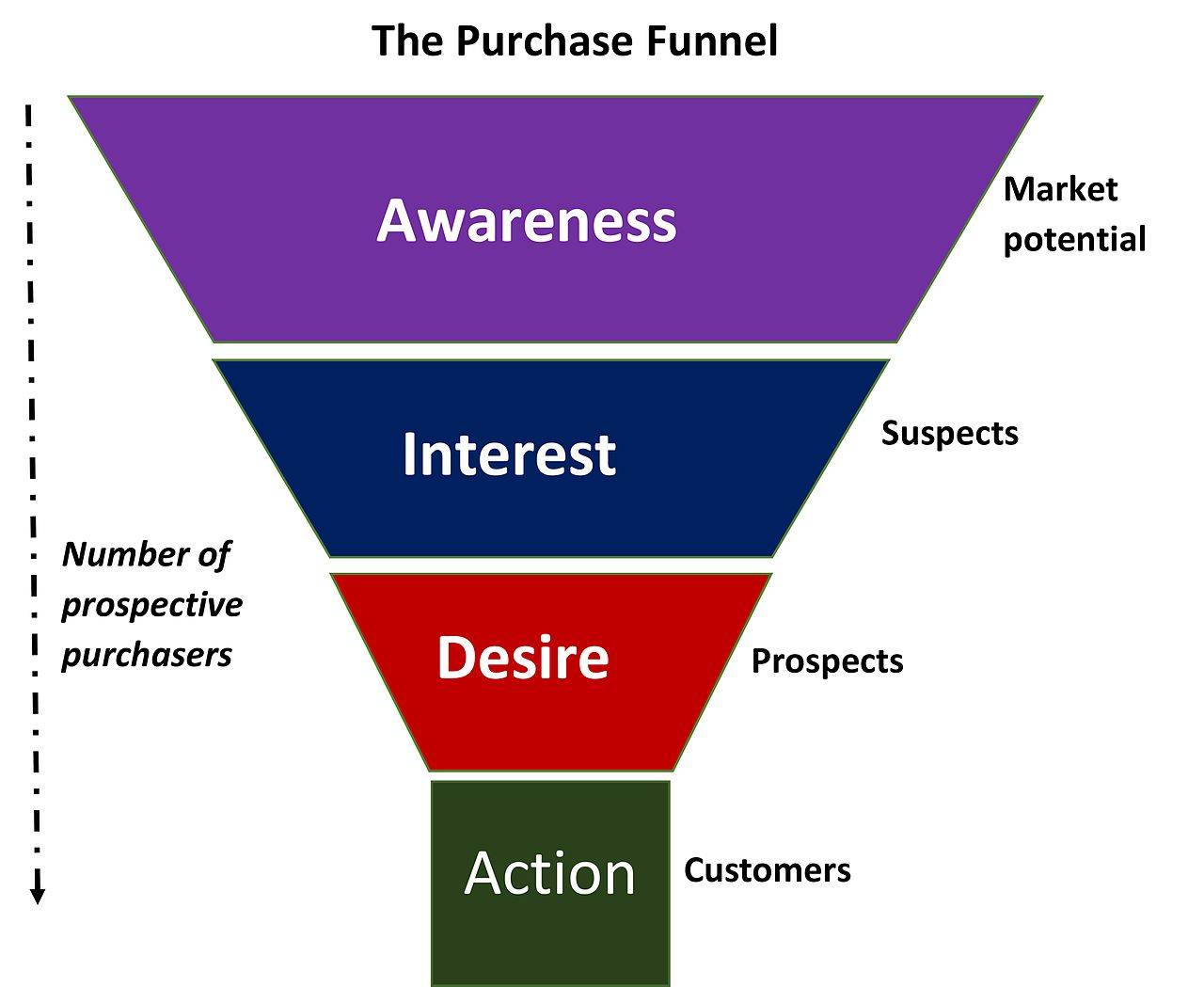
It’s so linear that you almost expect buyers to wear army uniforms and march towards purchase in a very, very orderly manner, then disappear.
Sprout Social’s depiction of a funnel is a bit different — at least it tells you that the (first) purchase is not the end of your relationship with a customer.
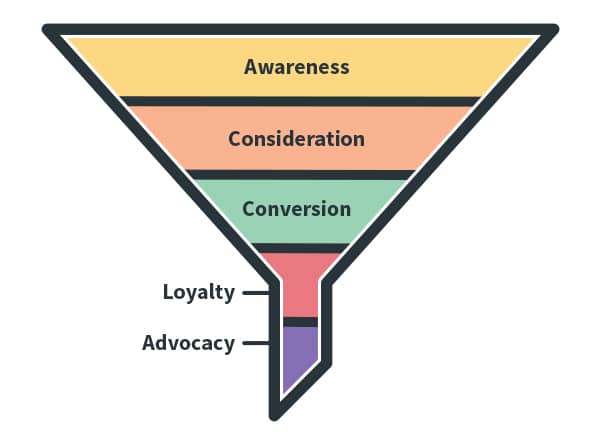
Can you think of a buyer journey that’s been this linear? They’re the exception rather than the norm, and they usually work for low-ticket products or impulse purchases. Everything else looks closer to a loop than a straight and narrow funnel.
I asked AI to generate an image that depicts attention loops based on this newsletter issue. Here’s what it came up with:
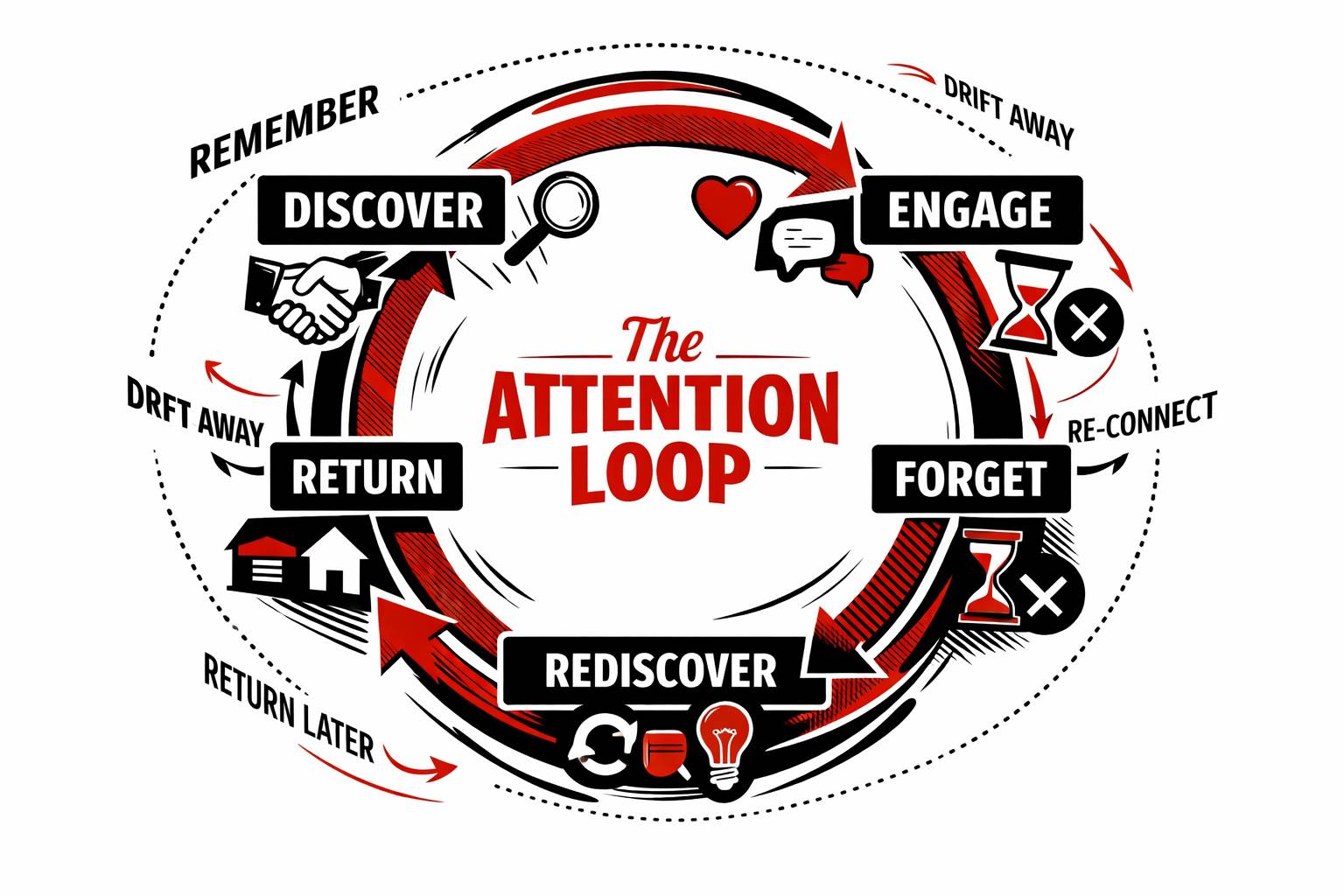
Pretty accurate. It’s crowded, hectic, and dense, which is exactly how a user distributes their attention these days.
We’ll talk more about it and how to leverage them in a second, after a quick message from today’s partner, who has a solution for leveraging attention loops on LinkedIn.
📣 Brought to you by 📣
DemandSense
People visit your site all the time. Some are seriously considering working with you. Others bounce in five seconds. The problem? They all look the same in your analytics.
DemandSense shows you who’s visiting — name, company, which pages they viewed, how long they stayed — and scores them by fit and engagement. You end up with a list of people already interested in what you have to offer.
Reach out while they’re still researching. Add them to a sequence. Target only the ones worth your budget. Stop guessing who might be interested. Start talking to people who already are.
Turn traffic into real pipeline
Want your name up here? Reserve your slot! (Sold out until April)
In the olden days, especially when social media algorithms allowed it, you discovered something, you followed it, you stayed close enough to eventually act.
That is no longer how attention moves.
These days, people notice you briefly, disappear, resurface weeks later, skim something half-distracted, then return much later when timing and relevance finally align. Growth happens inside that loop, not at the moment of discovery.
This is the best-case scenario, where people are in your orbit long enough to “fulfill” the loop. In most cases, though, people exit the loop long before they even consider buying. Not because they don’t like what they see but because their feeds are so crowded and their attention so in-demand that they can’t keep up.
Nevertheless, you’re much better off treating attention as a loop rather than a funnel.
Here’s why funnels don’t tell you anything about how attention works.
Funnels describe movement. Loops explain memory
Funnels assume direction and momentum. People enter, move forward, and drop out.
Attention does something messier: it oscillates.
This is well documented in behavioral research. People rely on recognition over recall, meaning they return more easily to environments they understand without having to relearn context every time.
For you, this means that:
- People who already know you are more likely to return to your content/buy from you than to/from a brand they just discovered.
- Yet, if someone offering similar things is already in your prospect’s orbit, you’ll have a hard time gaining their attention.
This is why predictability matters. When your presence feels fragmented across channels, formats, and cadences, every interaction becomes a fresh cognitive task. Even high-quality content struggles to survive that friction.
People do not build habits around things that require constant reorientation. They build habits around things that feel familiar.
If you feel the need to change formats, offers, and stances every quarter, resist it!
Why most growth strategies decay
A lot of growth advice optimizes for visibility and acquisition because those metrics move fast and look impressive. Retention signals lag behind, which makes them easier to ignore.
The same pattern shows up across platforms. Reach spikes fade. Attention that returns compounds.
This is where many creators and solpreneurs get stuck. They keep widening the top of the funnel without strengthening the loop underneath it. Growth looks healthy for a while, then stalls, then starts to feel fragile.
The problem rarely lies with content quality. It lies with attention design.
Channels don’t create loops. Some just make them easier to maintain
Attention loops can exist across many channels: email, podcasts, communities, events, social platforms, products.
The difference lies in how much those channels allow you to maintain constant, low-friction connection without depending on an algorithm’s mood.
Email consistently performs well here, which is why newsletters tend to become the backbone of many attention loops (and businesses). Not because email is trendy, but because it removes intermediaries and it delivers messages constantly.
Unlike algorithmic feeds, email allows you to stay top of mind without competing in an infinite scroll or re-earning distribution every time you publish.
That does not mean email is the only viable loop anchor. It means it behaves like infrastructure rather than exposure.
Infrastructure is boring. Infrastructure is also why things hold.
80% of my clients told me: “I found you on social media but bought from you because of your emails”. This is what the right attention loop does for you: keeps people in your orbit long enough for them to trust you and/or get to a stage where they need what you’re selling.
Inside our newsletter growth bootcamp, we’ll engineer such a system: one that attracts more people into your orbit AND keeps them there. Join us!
More importantly, an attention loop allows you to build retention too. It’s not a one-and-done-out-of-the-funnel thing. It’s a consistent relationship where trust gets deepened.
How to treat attention like a loop, not a funnel
If you want to redesign for loops, a few things need to change.
- First, clarify the role you play. Not your niche, your job. What problem does your presence reliably solve for people over time?
- Second, reduce variation where it creates friction. Consistency in cadence, format, and depth lowers cognitive load and increases return.
- Third, design for the second interaction, not the first. What should someone expect after discovering you once? Where do they go next? What reinforces memory?
- Fourth, choose at least one channel that allows direct, repeat connection without algorithmic mediation. This is where newsletters/email often shine, but the principle applies elsewhere too (communities and SMS marketing, for instance).
- Finally, measure what comes back. Return visits, replies, repeat buyers, recurring readers. Growth signals that survive time matter more than spikes that impress dashboards.
Remember that attention accumulates through familiarity rather than pressure.
Can you get comfortable with boredom?
Most of the people I work with are creative types: they want to share as much as possible with their audiences. Invariably, this causes them to get bored with formats, topics, ideas, often even channels.
The most successful of them are those who push through the boredom, those who understand that they may be bored of repeating the same message 10 times BUT their readers only saw it twice — and they already forgot it.
So they say it 10, 100 more times, as many times as it takes for it to stick.
As for creative outlets, they find them elsewhere. They experiment with a social media channel more often than with email (because that’s the core of the business, so you don’t mess with it when it works).
And yes, they also understand that the “screaming into the void phase” is often much longer than they had anticipated.
The Council Bulletin
Since last week, we welcomed two new members into The Council!
And people voted on the first challenge/sprint, so the newsletter growth bootcamp is happening.
Council members have free access to this bootcamp and all upcoming ones, so if you were considering joining us, now’s the perfect time. Come on over!
🔦 Community Spotlight
I recently joined Jay Melone’s Wedge Offer masterclass and I was impressed! This masterclass teaches you how to develop entry-point offers that attract premium clients and do the selling for you. The thing that impressed me the most was the depth of this 3-hour masterclass that’s FREE! I don’t know many people who put so much time and effort into a free product. Even if a wedge offer is not for you, I’m sure you’ll benefit from the exercises you’ll do. Join the next session for free here.
Need me in your corner? Here’s how I can help you:
- Promote your brand to 30,000+ entrepreneurs and creators.
- Need a bigger, more relevant audience? Who doesn’t, right? The Audience Accelerator course will teach you how to get it with zero hacks and sleazy bro tactics.
- Grab the Strategic AF Welcome Sequence to delight and convert subscribers from the first emails. Plus my framework to personalize it through automation.
- Boost your chances of success by 400%: document your strategy with The Guided Strategy Template.
- Get my product launch email templates that sell: 5+1 emails you can send to your list in 45 seconds.
- Book a 1:1 strategy session with me. Let’s unlock your growth in 60 mins!