Most “creator economy” reports mix up influencers, big YouTubers, agencies, and actual solopreneur businesses. This one doesn’t.
We asked 153 people running 1-person or founder-led businesses how they made money in 2025 — offers, channels, newsletters, AI — and what they’re doubling down on in 2026.
Real benchmarks from solopreneurs and micro teams
36 charts with real, unbiased data. Correlations between revenue, channels, time in business, and more. All the data on solopreneur businesses you’ve been looking for and none of the bias you usually see in industry reports.
Because this report was built by a community, not a data analytics company with an agenda.
- Not influencer numbers.
- Not agency revenue.
- Not “I have 1M subscribers.”
Just people selling services, digital products, and retainers to an audience they built themselves.
Key findings
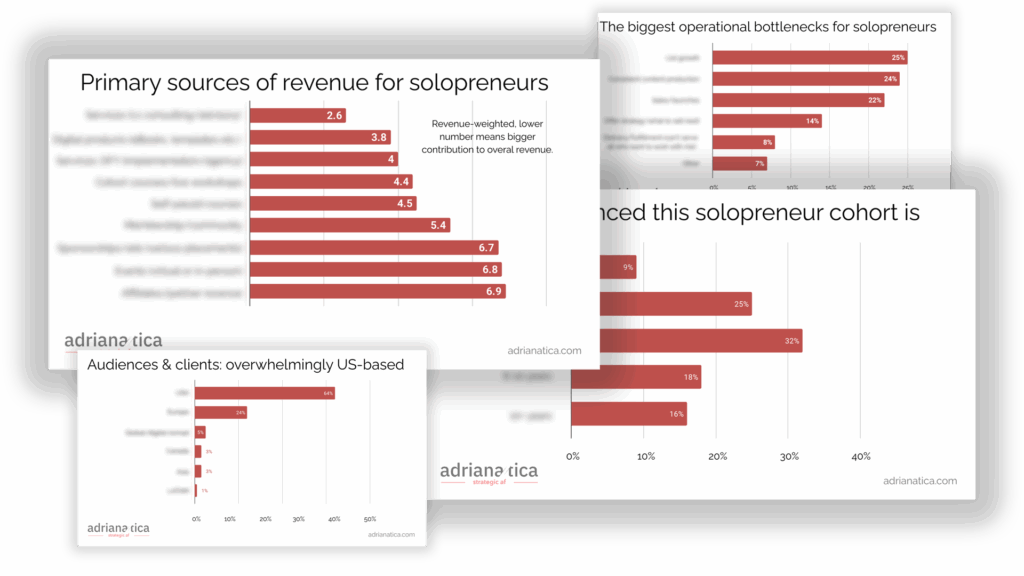
- Services still pay the bills. Even though most respondents offer products, 1:1 and done-for-you ranked higher as revenue sources.
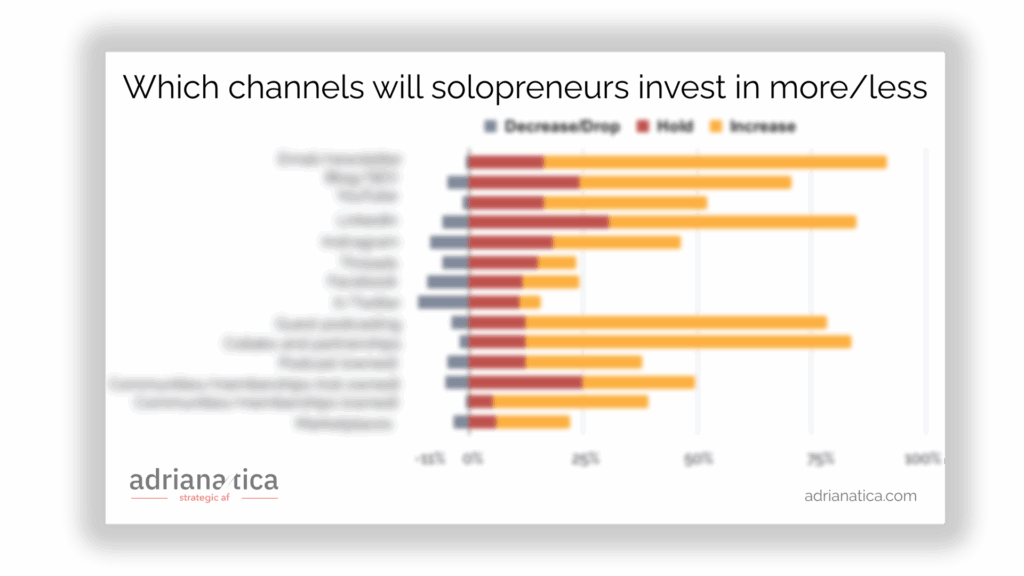
- LinkedIn + email is the power combo. It’s the channel pair most people said they’ll increase in 2026.
- Most solos aren’t beginners. The majority have been in business 3+ years and sit between $10k and $250k/year.
- AI is already default. 9 in 10 use AI — the advantage now is where you plug it in, not “if.”
- Marketplaces are optional. 70%+ said marketplaces “don’t apply” to them.
How the data was obtained
- Self-applied survey run Sept–Nov 2025
- 153 valid responses
- Audience: solo operators, creator-founders, small teams (2–5)
- Mostly B2B, mostly North America + Europe
- Cleaned for obvious outliers
What is the State of Solopreneurship 2026 report?
The State of Solopreneurship 2026 is a data-backed report on how real solopreneurs, creator-founders, and tiny teams made money in 2025 and what they plan to double down on in 2026. It covers offers (services, digital products, memberships), marketing channels (email, LinkedIn, SEO, partnerships), newsletter benchmarks, and AI usage.
Who is this report for?
Solopreneurs, consultants, creators who sell their own products, and founder-led micro businesses (2–5 people). If your business isn’t an agency with 20 staff or a YouTube influencer with brand deals, this is for you.
Where did the data for the solopreneurship report come from?
From 153 respondents who run solo or founder-led businesses. The survey ran Sept–Nov 2025. It’s self-reported, cleaned, and segmented.
What makes this different from “creator economy” reports?
Most creator reports mix influencers, agencies, and big channels. This one doesn’t. It focuses on audience-led businesses that monetize with services, strategy, and digital products — what most actual solopreneurs do.
What benchmarks are included in the soloprenur report?
- Revenue bands for solo businesses
- Most common offer types
- Newsletter size, cadence, and time-to-first-revenue
- Channels solopreneurs will increase/hold/decrease in 2026
- How many are already using AI (and for what)
Do I have to run a newsletter for this to be useful?
No, but a lot of respondents do. So you’ll see how many send weekly, typical open rates, and how quickly they sell after someone joins — useful if you plan to start or fix your newsletter.
May I cite this report in my own content/newsletter?
Yes. Credit it as: “State of Solopreneurship 2026 (Strategic AF)”, use this link https://adrianatica.com/state-of-solopreneurship and you’re good.
Is this representative of all solopreneurs?
No — it’s representative of online, audience-building solopreneurs (newsletter, LinkedIn, services, digital products), mostly in US/EU, mostly B2B.
Do I get the charts too?
Yes. The download includes the report and the key charts (offers, channels, newsletter, AI) so you can use them in planning.
How are these solopreneur business benchmarks for 2026 different from all reports out there?
Most benchmarks online are built on influencer or agency data, which makes them useless for a one-person, audience-led business. The State of Solopreneurship 2026 report gives you creator/solopreneur–specific benchmarks: average revenue bands, which offers make the most money (services vs digital products vs memberships), how fast people monetize their newsletters, and which growth channels solopreneurs plan to increase this year.
If you’ve ever searched for “solopreneur income benchmarks,” “creator business metrics,” or “how much do solopreneurs make,” this is the dataset you want.
Will I find the channels that work for creator-founders (not influencers)
This report also analyzes which marketing channels real solopreneurs are doubling down on in 2026 — email, blog/SEO, LinkedIn, partnerships, and guest podcasting — and which platforms most of them said “doesn’t apply.”
That makes it a useful reference if you’re looking for “best marketing channels for solopreneurs,” “newsletter growth for consultants,” or “LinkedIn vs Instagram for creators.” It’s built for founder-led micro businesses that sell services, strategy, and digital products, not for brand-deal creators.